






What Is an Old Mine Cut Diamond? Meaning, History, Shape, Characteristics, and Worth

We can all thank Travis Kelce for getting down on one knee and giving Taylor Swift one of the most historic and stunning engagement rings back in August of 2025. Few things can steal the show, but the custom elongated old mine cut diamond bezel set in yellow gold, finished with a delicate filigree along the band, did exactly that. Within hours, searches for old mine cut diamonds spiked across the internet, and jewelers everywhere started to experience an influx of requests for a cut that hadn’t been popularized in decades.
Here’s the thing, though, old mine diamonds are not new. A nod to their name, they are one of the oldest in existence, dating back centuries to a time when diamonds were shaped entirely by hand. What Taylor Swift’s engagement did was remind the world that something that old still has relevance and value today. Whether you are discovering the old mine cut diamond for the first time or have been loving it for years, this guide covers everything you need to know before you join Taylor in saying yes to an old mine diamond.
Explore everything from its history and characteristics to how it compares to other cuts, what it’s worth, and why a lab grown old mine diamond might be the most accessible way to own one today.
What is an Old Mine Cut Diamond?
An old mine cut diamond is an antique diamond cut with a history dating back to the 17th and 18th centuries, long before machine cutting and precision tools existed. The name comes from diamond’s origin; stones cut during this era were sourced from the “old mines” of India and Brazil, the world’s primary source for diamonds at the time. When South African mines were discovered in the 1870s, mining as we know it today took over, and new cutting techniques were developed, gradually phasing out the old mine diamonds.
Unlike the popular cuts that dominate jewelry cases and celebrity trend lists today, old mine cut diamonds have a slightly squared shape with softly round corners, a high crown, a small table, and a large culet—the flat facet at the bottom of the stone. There’s also a difference in how they interact with light. Old mine cut diamonds produce a softer, warmer sparkle, unlike more modern cuts that have a sharper and mirror-like appearance.
Here are the characteristics that set old mine diamonds apart from the rest:
-
Cut: shaped by hand without standardized proportions, an old mine cut diamond is intentionally imperfect, each one slightly different from the next. Unlike modern diamonds, they cannot be graded on a standard cut scale, so the quality of the stone is judged by how it looks and performs to the eye.
-
Color: old mine cut diamonds tend to show more warmth, often registering in the K to M range on the color scale.
-
Clarity: the large culet can make some inclusions more visible, though the stone’s softer light performance can also work in the other direction, concealing some inclusions to an untrained eye.
-
Carat: an old mine cut diamond can appear smaller than modern cuts of the same weight, as more of the stone’s weight is carried in the crown and depth range than spread across the surface.
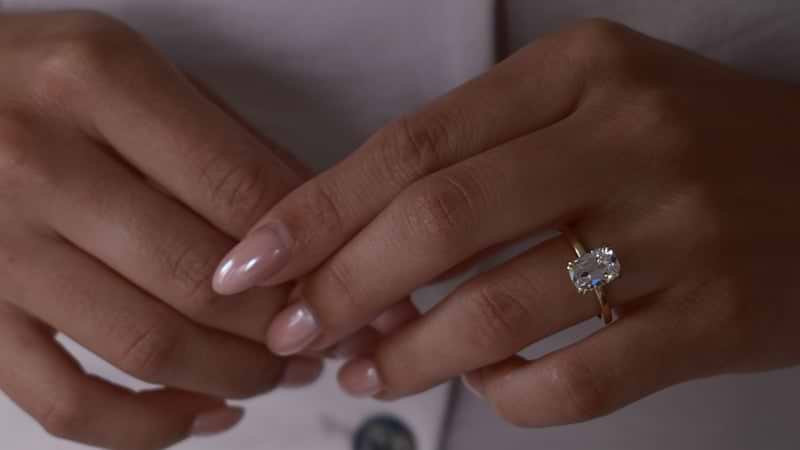
What Does an Old Mine Cut Diamond Look Like?
Traditional old mine cut diamonds typically have a square shape with softly rounded corners, similar to the cushion cut. The crown, or upper portion of the diamond, sits higher than in a modern cut, and the table, the flat facet on top, is noticeably smaller. At the bottom of the stone sits a large culet, a flat facet that is much larger than the tiny or pointed culets found on most modern diamonds. When you look straight down into a traditional old mine cut diamond, the culet can appear as a small circle at the center of the stone, which is one of its most recognizable features.
Modern diamond cutting techniques have adapted these signature characteristics to more elongated shapes without losing the character of the traditional old mine cut.
Three Old Mine Cut Diamonds That Show Their Beauty and Versatility
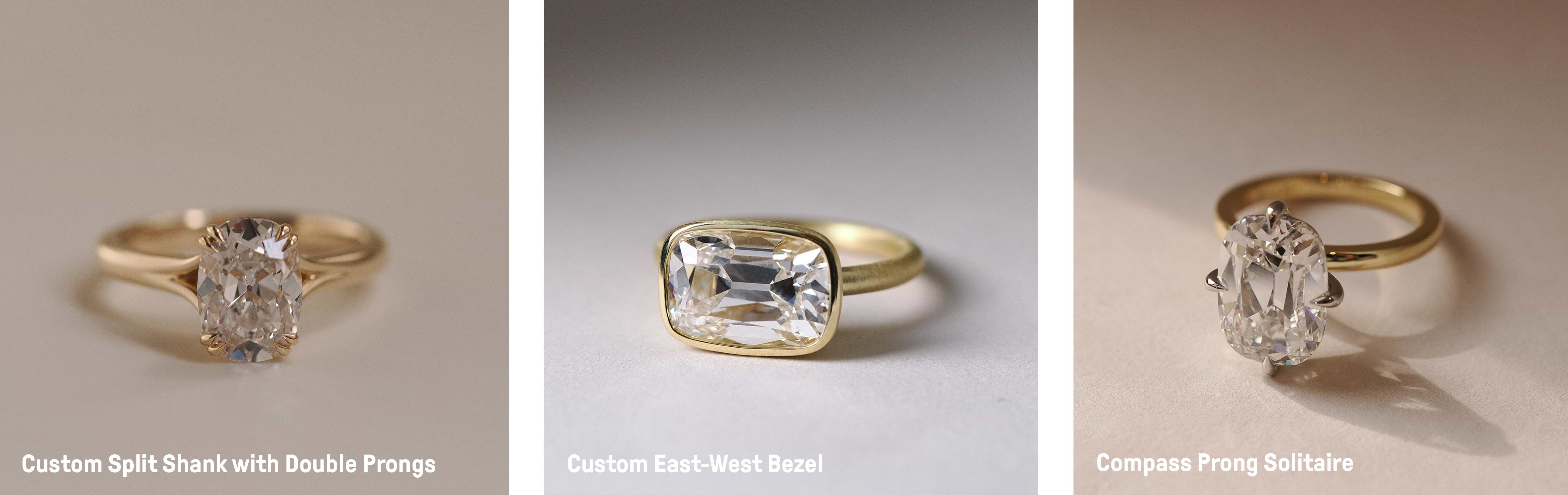
One of the most compelling things about the old mine cut is how beautifully it translates across different ring styles. Here are three engagement rings that spotlight what this cut can do.
Old Mine East-West Button Back Ring
For those who love a modern take on an antique classic, this horizontal east-west puts the distinctive shape of the old mine cut diamond on full display.
Old Mine Cut Petals Cluster Ring
For those drawn to something with extra romance, the petals cluster setting wraps the old mine cut in a floral arrangement that highlights the candlelit sparkle the cut is known for.
Antique Cushion Compass Prong Ring
For those who want the old mine diamond cut to stand on its own, the diamond is elevated by claw prongs designed to hold the stone securely while allowing light to reach the diamond from every angle.
Lab Grown Old Mine Cut Diamonds at Plum Diamonds
Old mine diamonds have had staying power for centuries, long enough for lab grown technology to make the beloved cut more accessible. Lab grown mine cut diamonds are physically and chemically identical to mined stones, but cost nearly half the price and have far less impact on the environment.
Every old mine cut diamond at Plum Diamonds is crafted to order in our certified-sustainable facility. Like Taylor, your love story deserves a ring worthy of it. Browse our lab grown old mine cut diamond collection to find yours.