


 GIFTS





Low-Profile vs. High-Set Engagement Rings

Low-Profile vs. High-Set Engagement Rings: Which Is Right for You?
Diamond cut, metal choice, band width, everything that makes an engagement ring special comes down to one thing: your personal preferences. And setting is no different. It plays an important role in how that diamond looks, how it feels, and whether or not it fits into your everyday life. When shopping for your dream engagement ring, consider how all of the components of an engagement ring will come together to create a ring you’ll love wearing for a lifetime.
Low-profile and high-profile engagement rings are two of the most popular settings you come across while searching for engagement rings. Each has its own pros and cons; understanding each will help you choose a ring you’ll feel confident wearing every day.
What Is a Low Profile Engagement Ring?
A low-profile engagement ring sits closer to your finger rather than elevated by prongs in traditional settings. For real-life examples, there’s Zoë Kravitz's elongated cushion-cut diamond set in a low-profile yellow gold bezel, and Zendaya’s stunning east-west engagement ring. If either of those rings can tell you anything about low-profile engagement rings, it would be that a low setting doesn't limit you in expressing your personal style.
From sleek bezels to modern east-west designs, this setting gives you plenty of options to find something that feels unique to you, while keeping the stone closer to your hand.
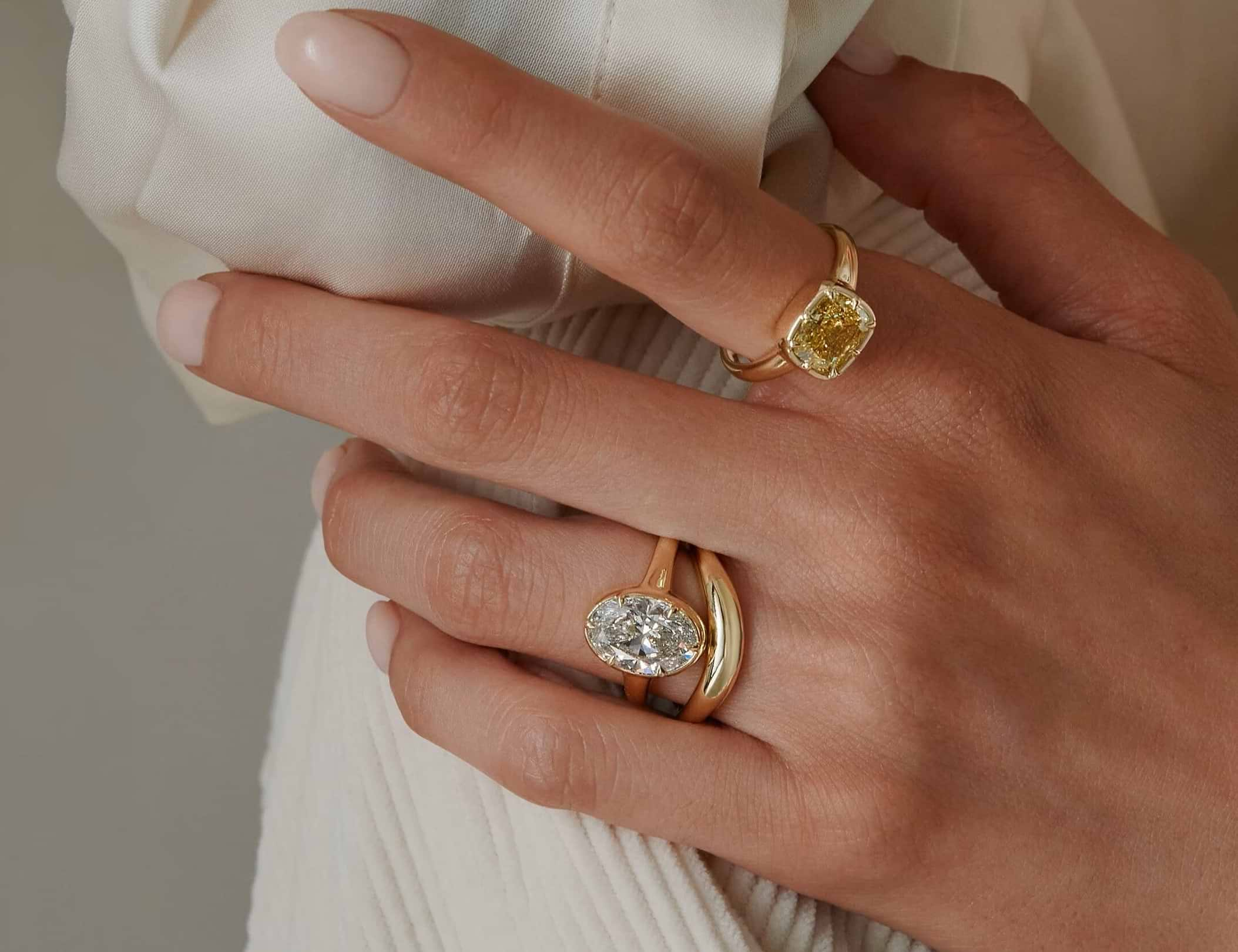
Is a Low Profile Engagement Ring Right For You?
Because the center diamond sits closer to your finger, it’s less likely to snag on clothing and hair, and has fewer chances of accidental bumps. These all play into why low-profile engagement rings have become so popular. If you’re active, work with your hands, or simply prefer understated (but beautiful) jewelry, low-profile engagement rings may be the right choice for you.
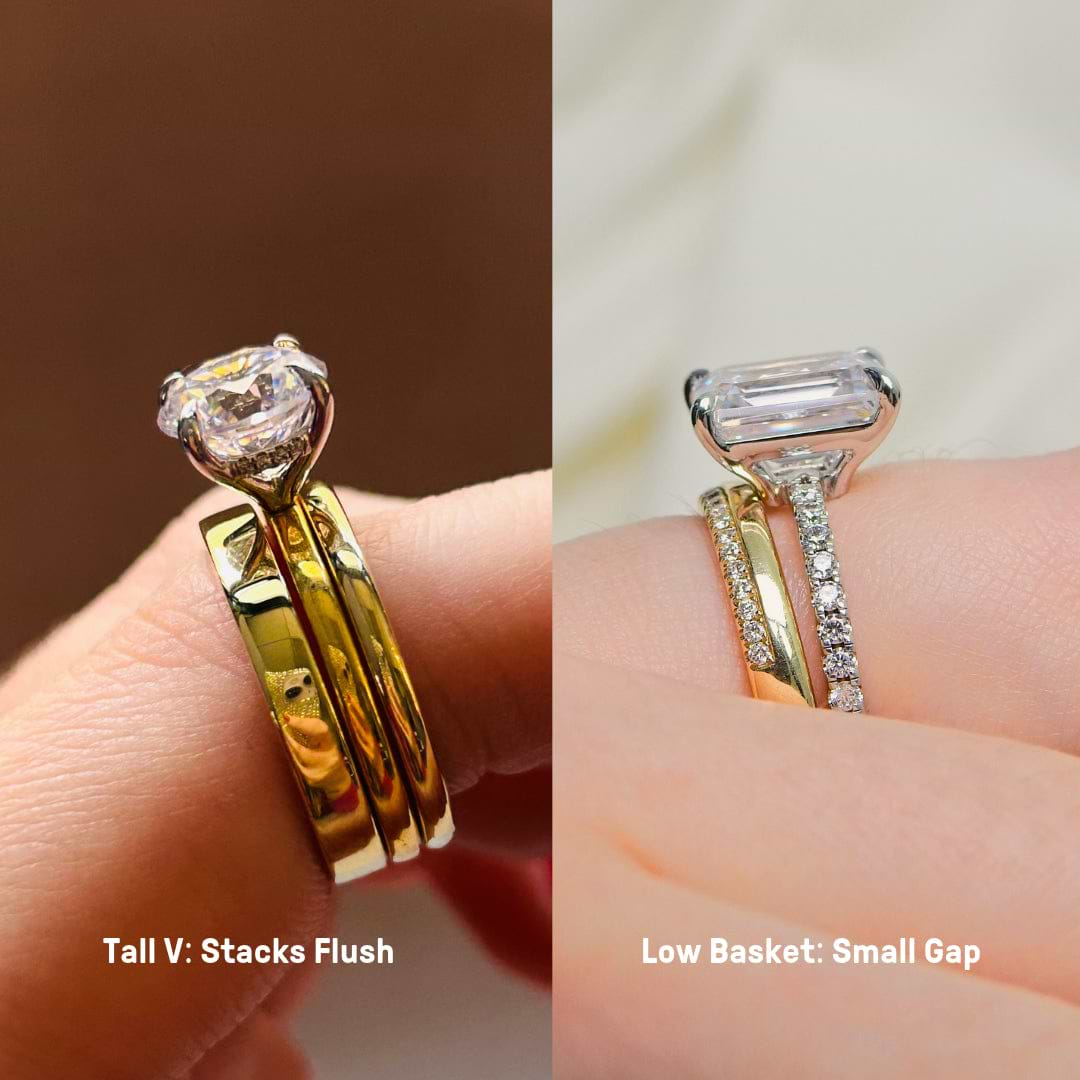
With that said, it’s also important to know that low-profile settings can restrict the type of wedding band you choose. Their position on your finger makes it harder for wedding rings to sit flush against the engagement ring, leaving a gap in some cases. Learn more about the pros and cons of low-profile engagement rings here.
What Is a High Set Engagement Ring?
A high set engagement ring is one of the most common settings you’ll come across during your search. That’s mostly due to its classic design, where the diamond sits above the finger, supported by prongs and, in some designs, shoulders. This creates more space beneath the center stone and gives the diamond a prominent position above the band.
The added height also exposes the center stone to accidents like snagging on clothing or bumping during everyday activities.
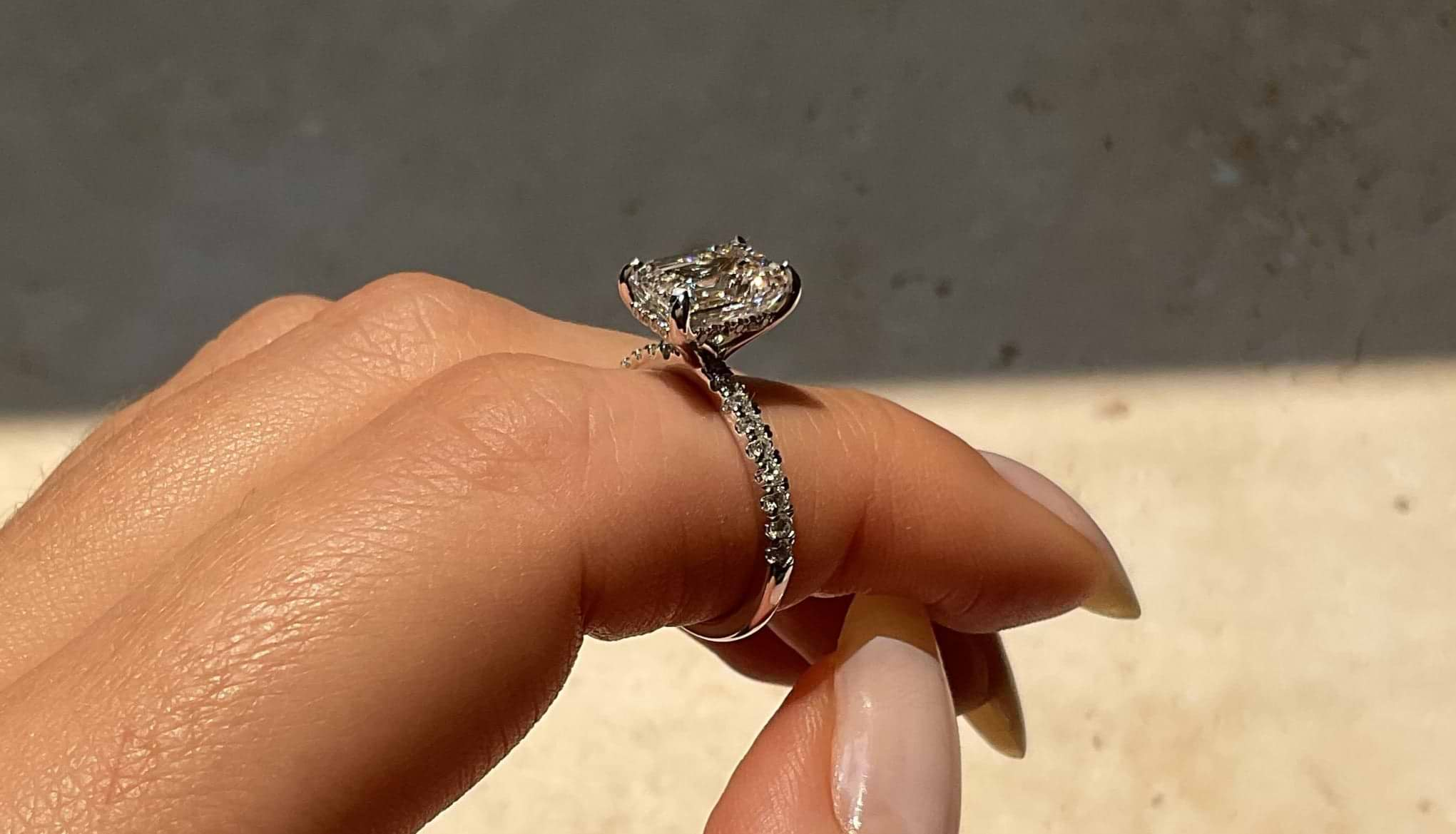
Is a High Set Engagement Ring Right For You?
Brides who are all about glamour normally gravitate towards high-set engagement rings. The elevated positioning of the diamond makes it hard to miss, no matter what cut you choose. With more visibility, it’s easier for light to hit it at any angle, adding to the glamorous look by enhancing sparkle. If you live a more active lifestyle or work a lot with your hands, you’d want to be more cautious when wearing your high-set ring.
The Real Differences Between Low and High Set Engagement Rings
The pros and cons above should give you a clearer idea of what separates these two settings. But before making your decision, there are a few differences worth keeping in mind as you compare your options and make a final decision on which is right for you.
- Diamond Visibility: High-set engagement rings give the center diamond a more prominent appearance, making it stand out above the band. Low-set engagement rings create a minimalist look, with the stone sitting closer to your finger.
-
Wedding Bands: High-set rings often provide more space beneath the center stone, making it easier to pair with a variety of band styles. Low-profile settings often require a contoured, notched, or custom wedding band if you desire a flush fit.
- Design Capabilities: Both low and high set rings have an abundance of design options, but certain diamond shapes, sizes, and setting details may require more height. High-set designs give you more room for elevated baskets or intricate mourning designs, while low-profile settings may require more collaboration with your jeweler to achieve the desired look you want.
These differences are worth adding to your list of questions to ask when shopping for an engagement ring, helping you better compare your options and find the perfect setting.
Questions To Ask Before Choosing Your Engagement Ring Setting
You have a lot to balance when choosing an engagement ring. Cost, the 4Cs, whether or not to choose a lab-grown or mined diamond, and the list goes on. But the more questions you ask, the closer you are to the ring you’ve dreamed of. When it comes to settings, there are a few that you should ask your jeweler during the process.
- Which setting will work best with my lifestyle?
Think about your daily habits, physical activities, and, in many cases, your career. How much impact your hands face every day can greatly influence whether you want a high-profile solitaire or a low-set cushion cut. - Can my preferred diamond and wedding band work with this setting?
Ask your jeweler whether your diamond cut of choice and carat size can affect the setting you’re considering. You should also discuss wedding band compatibility, especially if you want both rings to sit flush together. - Can the setting be customized to fit my preferences?
Ask your jeweler about setting height, prong placement, or basket design to get closer to the design you desire. An experienced jeweler can explain which modifications are possible and how they may affect the ring’s appearance, comfort, and construction.
Have more questions about engagement ring settings? We’re here to answer them all. Our team can help you explore everything from diamond shapes and settings to how you can build your dream ring from scratch. Start by getting inspiration from our collection of lab-grown diamond engagement rings.