






How to Design Your Own Engagement Ring

Your engagement is a commitment to your partner and the love you share. That partnership is a unique union, and one of the best ways to symbolize its individuality is a custom diamond engagement ring—a ring designed and made just for you by a master jeweler.
You might think a custom diamond engagement ring is a luxury available only to a few. In fact, designing a unique ring may not be as expensive or as complicated as you think. In this article, we’ll show you how to design your own engagement ring, including:
-
Why you should design your engagement ring.
-
The factors that affect the ring’s price.
-
A step-by-step guide to designing an engagement ring.
-
Answers to your custom engagement ring questions.
Why You Should Design an Engagement Ring
Can you imagine the perfect engagement ring? What shape is the diamond? How big is it? What’s the setting, and how is the ring styled—solitaire, pavé, split shank, infinity band? Is it made of gold, platinum, or a blend of metals? With a custom engagement ring design, the ring on your finger will be in harmony with the ring in your mind’s eye.
Or perhaps you’re struggling to decide. You have browsed engagement ring collections but haven’t found a ring that excites you. You have a list of maybes, but every one has something you’d change if you could. If that sounds like you, a custom engagement ring is the solution. Select a standard ring and tweak the design. Or start from scratch and create something entirely new.
Other reasons to design an engagement ring include:
-
Creating a ring that perfectly fits with your personal style.
-
Gaining full creative control over every detail.
-
Prioritizing features that matter most so you can stay within your budget
-
Incorporating design elements that reflect your personal, family, and community traditions.
A ring designed together by you and your partner is a unique and meaningful symbol that becomes part of your relationship's story.
How To Start Designing a Ring: Budget Matters
How much do you want to spend on your engagement ring? It’s helpful to know before you embark on your design. A ballpark budget will help you to prioritize the features that matter most. You also need to understand the elements that affect an engagement ring’s value. Let’s look at some of the key factors.
Diamonds
As a rule, bigger diamonds—those with a higher carat weight—cost more. That’s as true of lab grown diamonds as it is of mined diamonds. But carat weight isn’t the only factor that influences diamond price.
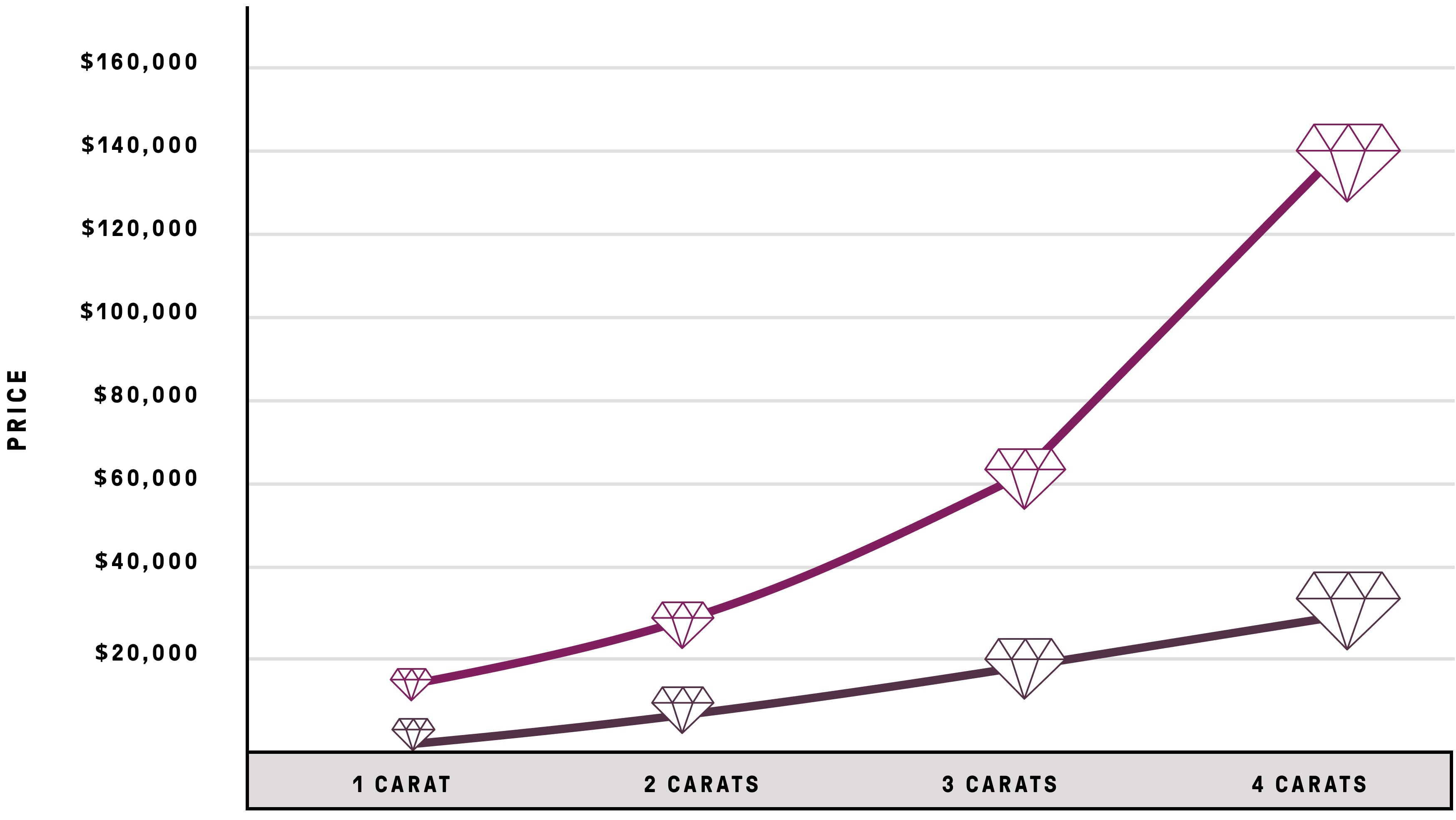
You should also consider cut grade, color, and clarity.
-
Cut grade measures the precision and accuracy of the diamond’s cut, which determines whether it achieves the desired brilliance, fire, and sparkle.
-
In a white diamond, color measures how colorless a diamond is. The closer to completely colorless, the more valuable a diamond is.
-
Clarity measures the external (blemishes) and internal (inclusions) imperfections a diamond has. A flawless diamond will cost more than one with inclusions.
Another major cost factor is the diamond’s source. Lab grown diamonds cost 40-50% less than mined diamonds of comparable quality. That means you can choose a bigger stone, higher quality, or both while staying within your budget. Beyond the price advantage, lab grown diamonds are more sustainable. Diamond mining damages the environment and supports repressive regimes. Lab production is transparent, eco-friendly, and cost-effective.
We explored these factors in more detail in How Much Should An Engagement Ring Cost?
Metals
High-quality engagement rings are made of gold, platinum, or a combination of metals. Some jewelers offer silver engagement rings, but silver is softer and less durable for everyday wear. We recommend solid gold or platinum.
Gold is the less costly option and the most traditional. Gold rings are typically lighter than platinum while still being durable enough for most people. Platinum, valued for its distinctive silver-white color, costs more than gold. It is rarer, denser, and more durable, which makes it an excellent engagement ring choice.
Platinum is also hypoallergenic and is not mixed with other metals, so it’s a great option to consider if you have had a bad reaction to jewelry in the past.
Design Complexity
Intricate designs require more time, skill, and resources to make, which can increase the cost. Here are some factors that contribute to design complexity:
-
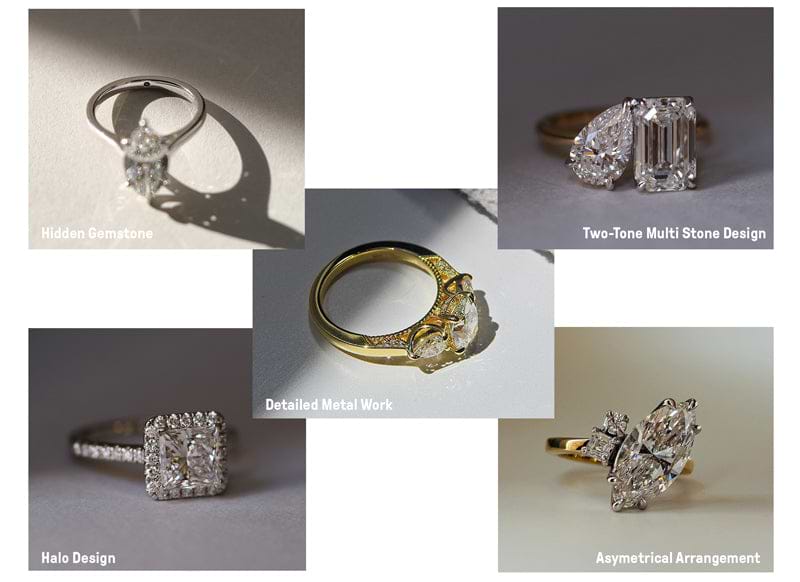
Detailed Metalwork: Details like filigree, milgrain, or engraving require advanced craftsmanship and more labor.
-
Custom Shapes and Settings: Unique settings, such as asymmetrical arrangements, multi-stone designs, or floating settings, use specialized techniques.
-
Multiple Stones: Accent stones, such as halos, pavé settings, or side stones, increase the ring’s complexity.
-
Mixed Materials: Rings that combine metals add another layer of intricacy.
-
Personalized Features: Custom touches like engraved messages, hidden gemstones, or symbolic motifs add extra production steps.
If your vision includes intricate details or unique features, expect these elements to influence both the timeline and cost.
Finding Inspiration Before Customizing an Engagement Ring
Before diving too far into different diamond cuts, metals, and settings, it helps to take a step back and add some clarity to your vision. Gathering inspiration by creating a mood board makes the process smoother and ensures the end result is exactly what your heart desires. Because of this wonderful thing called the internet, finding inspiration is one click or scroll away.
Using things like Pinterest boards, jeweler portfolios, and elements from your personal life, you can create a digital mood or vision board that guides meaningful design details. It can include diamond shapes, sizes, colors, metal preferences, and whether or not you’d like symbolic choices like an engraving.
Step-By-Step Guide to Designing Your Dream Engagement Ring with Plum
At Plum Diamonds, we’ve refined the custom engagement ring design process to make it simple and enjoyable. You’ll work with our design team to create your perfect ring with clear communication at every step.
Our streamlined approach takes the complexity out of custom design while ensuring you get exactly what you want.
Step 1: Choose Your Diamond
The center stone sets the foundation for your entire ring design. When choosing a diamond, consider:
-
Diamond shape: From classic round cuts to distinctive emerald or pear shapes
-
Size: Select a carat weight that matches your vision and budget
-
Quality: Focus on cut grade, clarity, and color that deliver the brilliance you desire
Our custom ring design specialists are happy to guide you through the selection process to find a lab grown diamond that achieves your ideal look within your budget.
Diamond Shape Spotlight
When searching for the perfect center stone, it’s easy to come across common cuts like round, oval, or cushion cut diamonds. But the unlikely gems are where you can find the ring that actually feels like you. The old mine diamond is one of those unlikely shapes worth considering. Though it’s recently been thrust back into the spotlight thanks to Taylor Swift's engagement, it’s been a quiet favorite among antique jewelry lovers since the 1700s.
As one of the oldest diamond cuts, it holds a lot of history and even more unique traits that make it stand out among the popular cuts you’ll come across. Its unique traits of larger facets, a high crown, a small table, and a large culet are all due to ancient techniques of craftsmanship that shaped each stone by hand, under candlelight. Its slightly squared shape and round corners sit somewhere between a cushion and a round cut, another reason why it should be considered amongst those favorites.
Whether you decide to customize your ring or shop a collection, old mine diamonds are great options. You can modernize them with an east-west setting or celebrate their antique essence with a yellow-gold cathedral or bezel setting.
Browse our collection of old mine lab diamond rings to discover their beauty and versatility.
Step 2: Choose a Setting
The setting is the metal framework that holds your diamond and forms the ring's overall design. Your setting choice affects not just how the ring looks but also how it feels on your finger and how securely it holds your diamond.
You can choose from styles like:
-
Solitaire settings that showcase your center stone with clean, classic lines
-
Pavé bands with small diamonds along the band for extra sparkle
-
Halo designs with diamonds tucked beneath the center stone for subtle brilliance
-
Cathedral styles where arches of metal rise to hold the diamond, creating an elegant profile
-
Bezel settings that wrap your diamond in a protective metal rim for modern sophistication
Start with a base design you love—you'll save time and money by modifying an existing style rather than creating from scratch.
Step 3: Customize the Details
Now refine your design with personal touches:
-
Select your metal: yellow gold, white gold, rose gold, or platinum
-
Adjust the band thickness and profile
-
Modify prong styles and placement
-
Add accent stones or special elements
-
Choose finishing touches like milgrain or engraving
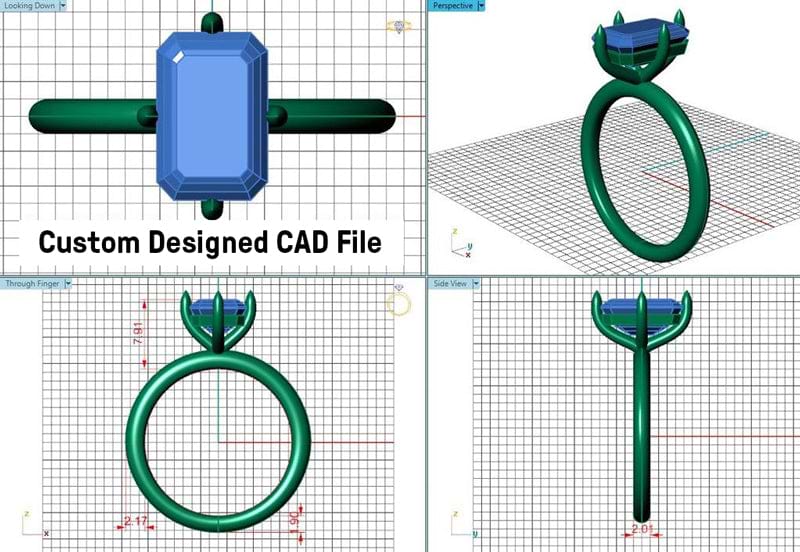
Before production begins, you'll receive detailed CAD drawings of your ring design. They show your ring from every angle so you can examine and approve each detail. Take time to review the drawings. We will make any adjustments you need to ensure the design matches your vision perfectly.
More on Band Thickness and Wide Band Engagement Rings
Band thickness is one of the most impactful yet overlooked ways to add a custom element to your engagement ring design. While the more traditional slim band has reigned as the popular choice, wide band engagement rings are having a (well-deserved) moment. With wide band engagement rings, you get a sturdier foundation, a more unique look, and added security for whatever center stone your heart desires.
You can keep it tamed with a 3mm wide band or go as bold as 6mm. This width addition opens up more opportunities for custom design. A wider surface area gives our craftsmen at Plum Diamonds more canvas to work with, making it ideal for detailing like milgrain edges, engraving, or pave diamond accents that run along the band. If you’ve been drawn to rings that fall under the architectural aesthetic, a wide band design might be exactly what you’re looking for.
Beyond aesthetics, wide bands offer practical advantages. That sturdier foundation of the wider band creates more durability, suitable for everyday wear and active lifestyles. Another thing to keep in mind when customizing your band thickness is your finger size and whether or not you want to add a wedding band.
Take a look at our collection of wide band engagement rings for inspiration on how to design one of your own.
Step 4: Importance of Collaboration
The best custom engagement ring designs emerge from close collaboration:
-
Share your vision clearly with our design team
-
Request adjustments based on the CAD drawings
-
Ask questions about any aspect of the design
-
Feel confident before giving final approval
Within 15-20 business days from your approval, your ring will arrive from our certified sustainable facility backed by a free lifetime sizing and care guarantee.
Mistakes To Avoid When Designing Your Engagement Ring
In all of your excitement about creating such a special heirloom, you’d likely have some nerves about getting it right. To ease those nerves, here are three mistakes to watch out for when designing a custom engagement ring:
-
Delicate designs: Intricate designs like filigree or thin prongs may be beautiful, but often don't hold up to daily wear.
-
Comfort and sizing: Bands that are too thin or thick can feel uncomfortable, and resizing may be limited for complex custom designs.
-
Trial phase: Approving a design without reviewing CAD drawings or mock-ups can lead to undesired surprises.
Beyond these, it’s also important to consider how your engagement ring will pair with your ideal wedding band. Keeping these tips in mind will help you avoid costly mistakes and ensure your ring is everything you’ve envisioned in beauty and practicality.
FAQs: How To Design a Ring
Get answers to common questions about creating your custom engagement ring.
How long does it take to design an engagement ring?
While your custom ring arrives within 15-20 business days after design approval, the design process itself moves at your pace: take time to review the CAD drawings and request any adjustments you need.
What if I don't know what I want?
Start by browsing our collection to identify elements you like. Our design team helps you combine your favorite features into a cohesive design. You don't need a complete vision, just a sense of what attracts you.
Can I preview the design before it's finalized?
Yes. You'll receive detailed CAD drawings showing your ring from every angle before production begins. Take time to review these carefully and request any adjustments needed to perfect your design.
Are there financing options available for custom engagement rings?
Yes. Plum Diamonds offers flexible payment options, including monthly payments through Affirm. Finance your purchase with rates starting at 0% APR.
Make Your Dream Ring a Reality
Your custom ring journey starts with a simple email or phone call. Share your ideas with our design team, and we'll guide you through each decision. Ready to begin? Contact our team to start crafting your perfect engagement ring.